
close
Choose Your Site
Global
Social Media
Views: 0 Author: Site Editor Publish Time: 2026-11-23 Origin: Site


The architectural and interior design sectors are shifting toward lightweight cladding materials to bypass the logistical hurdles of traditional masonry. Natural marble presents significant structural and maintenance barriers. These include extreme weight, inherent porosity, and the need for highly specialized fabrication labor. Heavy stone slabs demand reinforced substrates and complex mechanical anchoring systems. They also require ongoing maintenance to prevent staining and etching.
Evaluating whether synthetic alternatives can meet project requirements without compromising aesthetic integrity requires a strict comparison. We must analyze material composition, structural demands, and long-term performance. Modern manufacturing has introduced high-fidelity synthetic panels that mimic natural stone. These alternatives solve many structural limitations inherent to quarried rock. Understanding the exact technical differences between these materials ensures proper specification for your next commercial or residential build.
Cost-to-Value Ratio: Synthetic alternatives reduce combined material and installation costs by up to 70% compared to quarried stone, primarily through labor savings.
Structural Impact: At a fraction of the weight, synthetic sheets eliminate the need for reinforced substrates or heavy-duty mechanical anchors.
Application Limits: While offering superior water resistance, synthetic options have significantly lower heat tolerance and scratch resistance than natural stone, limiting their use to specific vertical applications.
Maintenance Reality: Synthetic surfaces require zero sealing and resist chemical staining, but cannot be repolished if deeply scratched, unlike natural stone.
Synthetic stone alternatives rely on advanced extrusion and printing technologies. PVC Marble Sheets consist of a multi-layer construction designed for maximum stability and visual impact. The foundation is a rigid polyvinyl chloride base core. This core provides structural integrity, impact resistance, and flexibility. Manufacturers blend the polymer resin with calcium carbonate powder. This specific mineral addition increases the overall density of the panel and prevents warping under normal interior temperature fluctuations.
Above the extruded core sits a high-definition marble-patterned film. This layer dictates the visual aesthetic of the finished product. Advanced digital printing techniques replicate the exact veining, color variations, and visual depth of natural stone. The printing process utilizes ultra-high-resolution scans of actual quarried slabs. Finally, a UV-cured protective topcoat seals the panel. This topcoat provides a high-gloss finish while protecting the printed film from fading, moisture penetration, and minor surface abrasions. The ultraviolet curing process instantly hardens the liquid resin, creating a durable, non-porous shield.
You must differentiate this material from other market alternatives. Acrylic panels offer high gloss but scratch easily and lack flexibility during installation. High-pressure laminates provide durability but struggle in high-moisture environments due to their kraft paper core. UV-coated polymer sheets specifically leverage the ultraviolet curing process to harden the top resin layer. This creates a highly reflective surface that outperforms standard laminates in wet zones. Design variables like color tone, veining patterns, and surface texture are entirely controlled through digital rendering rather than unpredictable geological processes.
Natural marble is a metamorphic rock. It forms when limestone undergoes intense geological heat and pressure over millions of years deep within the earth. The primary mineral composition consists of calcite or dolomite. This geological origin gives marble its distinct crystalline structure and iconic veining. Impurities like clay, silt, or iron oxides present during the metamorphic process create the unique colors and patterns found in different slabs.
These geological characteristics dictate how the material behaves in architectural applications. Marble possesses high structural density. It is incredibly heavy, often weighing over 15 pounds per square foot for a standard three-quarter-inch slab. It also features inherent porosity. The microscopic voids between mineral crystals absorb liquids rapidly through capillary action. This natural absorption dictates strict maintenance requirements. Facility managers must apply penetrating sealers regularly to prevent permanent staining from water, oils, or organic materials. Without this chemical barrier, the stone will permanently discolor.
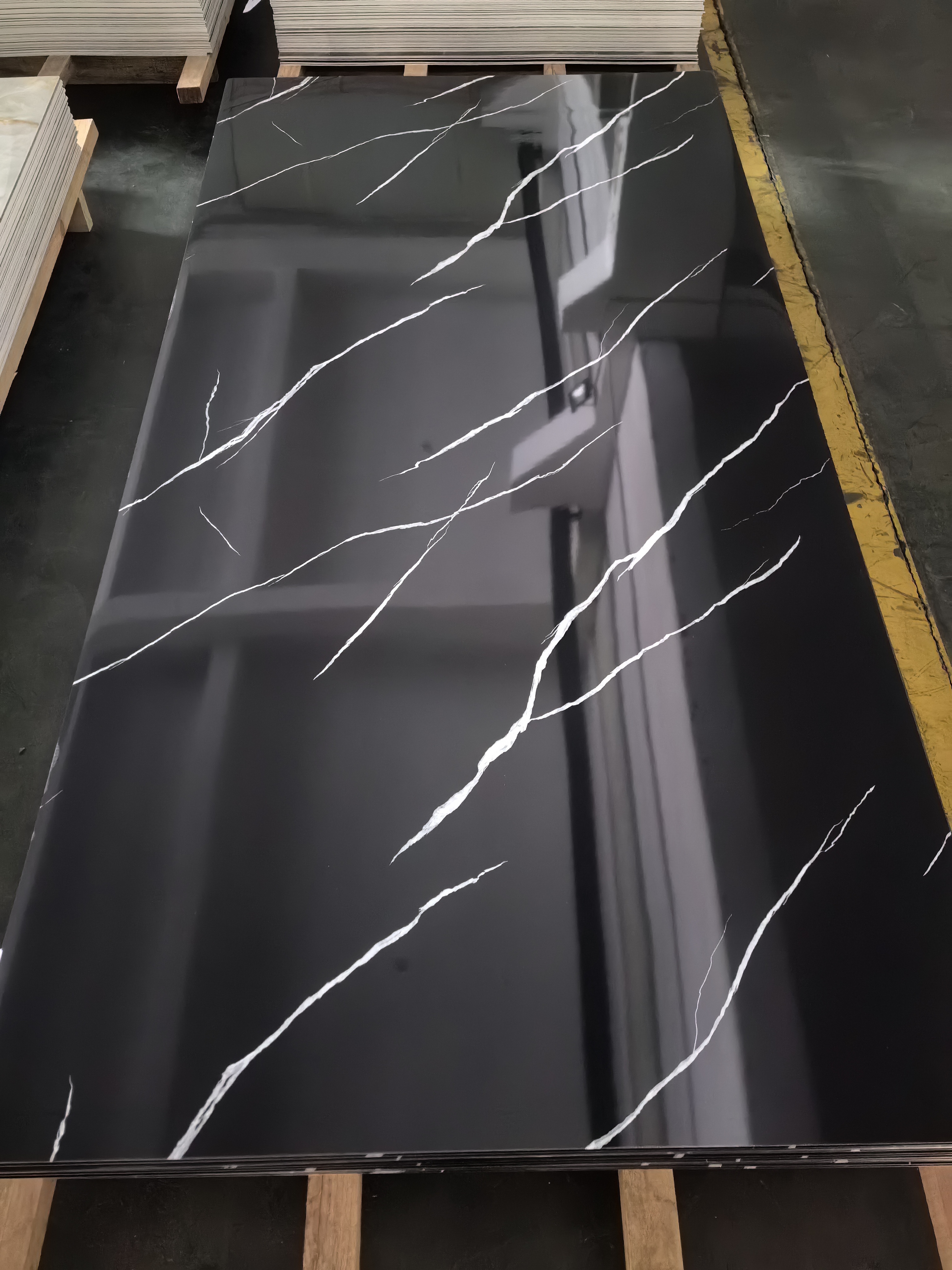
Natural marble delivers unmatched visual authenticity. The geological formation process ensures unique veining and authentic visual depth. Light penetrates the surface crystals, creating a natural refraction that gives the stone a subtle, luminous glow. No two slabs are identical. This inherent variation provides a bespoke luxury aesthetic that defines high-end architecture. Designers often utilize book-matching techniques, placing two sequential slabs side-by-side to create a mirrored pattern.
Synthetic alternatives approach aesthetics differently. High-definition printing provides a convincing mimicry from a distance. Modern manufacturing utilizes ultra-high-resolution scans of actual stone slabs to create the decorative film layer. However, pattern repetition remains inevitable on large-scale projects. If you install dozens of panels in a massive hotel lobby, the repeating vein structures become noticeable to a trained eye. Recent advancements in UV gloss finishes help bridge the gap. These thick, clear topcoats replicate the high-luster depth of polished stone, enhancing the illusion of natural light refraction and adding perceived depth to the printed veins.
Weight dictates the entire installation methodology. Natural marble imposes massive dead loads on building structures. A ten-by-ten foot feature wall clad in natural stone adds roughly 1,500 pounds of dead weight to the floor assembly. Vertical installations require heavy-duty mechanical anchors. Installers must use stainless steel clips, wire ties, and structural epoxies to secure slabs to the wall. The substrate itself must be reinforced masonry or heavy-gauge steel framing. Large vertical spans often require structural engineering approval before installation begins.
Synthetic panels feature an ultra-lightweight profile. A standard sheet weighs a fraction of its stone counterpart, typically around one to two pounds per square foot. This eliminates the need for mechanical fasteners entirely. You can install these panels directly over standard drywall, existing ceramic tile, or plywood. Installers use standard construction adhesives, such as polyurethane or modified silicone, to bond the sheets directly to the substrate. This drastically reduces structural preparation time and eliminates the need for heavy lifting equipment on site.
Material lifespan depends heavily on the application environment. Natural marble boasts high scratch resistance and extreme heat tolerance. You can place hot items directly on the surface without causing structural damage. However, the stone remains vulnerable to chipping at the edges upon heavy impact. Its calcium carbonate composition makes it highly reactive to acids. Lemon juice, vinegar, or harsh commercial cleaners will instantly etch the surface, leaving dull, permanent marks that require professional repolishing.
Synthetic panels offer a different durability profile. They provide high impact resistance. The flexible polymer core absorbs blunt force without cracking or shattering. The UV-cured surface features zero porosity, making it entirely stain-proof. Spills wipe away effortlessly without penetrating the surface. However, these panels are highly vulnerable to deep scratches and gouges from sharp objects. Once the clear topcoat is breached, the panel cannot be sanded or repolished. They also suffer deformation under high heat exposure. You cannot use them near open flames or high-wattage heat sources without risking permanent warping or melting.
Performance Metric | Natural Quarried Marble | Synthetic Polymer Panels |
|---|---|---|
Average Weight | 15+ lbs per square foot | 1.2 to 1.8 lbs per square foot |
Surface Porosity | High (Requires chemical sealing) | Zero (Completely waterproof) |
Heat Tolerance | Excellent (Non-combustible) | Poor (Warps under direct heat) |
Scratch Repair | Can be professionally repolished | Cannot be repaired if deeply gouged |
Installation Fastening | Mechanical anchors and epoxy | Polyurethane construction adhesive |
Acid Resistance | Poor (Etches instantly) | Excellent (Chemically inert) |
Moisture management dictates material selection in bathroom design. PVC marble sheets for shower applications excel in waterproofing capabilities. Traditional stone installations rely on grout lines to accommodate natural expansion and contraction. Grout is inherently porous and prone to micro-cracking over time. These cracks create hidden pathways for water intrusion, leading to structural rot behind the tile. Synthetic panels offer seamless installation. Large format sheets cover entire shower walls without a single horizontal joint. This eliminates the primary failure point of wet area cladding.
Mold and mildew resistance heavily favors synthetic materials. The non-porous surface deprives mold spores of the moisture and organic material they need to grow. Natural stone and cementitious grout absorb ambient humidity, creating an ideal breeding ground for fungi if not meticulously maintained.
Installation in high-moisture zones requires strict detailing to ensure longevity.
Apply a continuous, unbroken bead of structural silicone in all internal corners before pressing the panels into place.
Utilize specialized aluminum or polymer edge trims to cap exposed edges and prevent water ingress behind the panel.
Leave a precise 1/8-inch expansion gap at the bottom edge where the panel meets the shower pan.
Fill this bottom expansion gap fully with a high-quality, mold-resistant sanitary silicone sealant.
Roll the entire surface with a heavy rubber J-roller to ensure complete adhesive transfer and eliminate trapped air pockets.
Vertical cladding demands efficiency and visual impact. PVC marble sheets for walls provide rapid transformation capabilities for commercial spaces. Hotel lobbies, feature walls, and elevator corridors benefit from the speed of installation. A small crew can clad an entire commercial lobby overnight without disrupting daytime operations. Residential applications often utilize these panels for living room accent walls, media center backdrops, or wainscoting in high-traffic hallways.
Acoustic and thermal properties differ significantly from stone. Natural marble possesses high thermal mass. It feels cold to the touch and reflects sound waves aggressively, creating echo-heavy environments in large open spaces. Polymer panels offer slight acoustic dampening due to their softer core composition. They also maintain ambient room temperature, eliminating the cold, sterile feel often associated with massive stone installations. While not a dedicated insulation material, the synthetic core provides a minor thermal break against exterior walls, slightly improving the overall comfort of the interior space.
Material sizing impacts project logistics directly. PVC marble sheets 4x8 foot dimensions offer distinct logistical advantages. This standardized sizing aligns perfectly with standard drywall and plywood dimensions used throughout the construction industry. Estimators can calculate material yield rapidly and minimize waste during the cutting process. When framing is built on 16-inch or 24-inch centers, the panel edges align perfectly with the structural studs, ensuring solid backing for adhesive application.
Transport and site access become highly streamlined. Moving a custom-cut, fragile stone slab requires specialized A-frame trucks, heavy-duty suction lifters, and significant manpower. Stone slabs rarely fit into standard freight elevators, often requiring crane hoisting or exterior material hoists for high-rise projects. Standard 4x8 synthetic panels lay flat on standard pallets. Two workers can easily carry a panel up stairwells or slide them into standard commercial elevators. This mobility drastically reduces logistical friction on tight urban job sites where staging areas are limited.
Improper bonding compromises the entire installation. Panel delamination or bowing occurs due to extreme temperature fluctuations or the use of incompatible adhesives. Rigid adhesives that cure rock-hard will fail when the polymer panel expands and contracts with ambient temperature changes. The shear force generated by thermal expansion will snap rigid adhesive bonds, causing the panel to pop off the wall.
Mitigation requires strict adherence to manufacturer specifications. Mandate the use of high-grab polyurethane or modified silane polymer adhesives. These compounds remain flexible after curing, accommodating the natural thermal expansion of the core material. Apply the adhesive using a 1/4-inch V-notch trowel to ensure consistent coverage. Furthermore, you must ensure panels acclimate to room temperature for at least 48 hours prior to installation. Installing cold panels in a warm room guarantees immediate warping as the material expands against the curing adhesive.
Visible seams destroy the illusion of continuous stone. Poorly executed joints highlight the synthetic nature of the material. Cutting the panels with improper tools causes the UV topcoat to chip, leaving jagged, unsightly edges that cannot be repaired. A chipped edge exposes the white polymer core, instantly ruining the aesthetic.
Mitigation relies on precision tooling and proper trim integration. Utilize color-matched aluminum or polymer joining trims for internal and external corners. For butt joints, employ precision cutting techniques.
Use a heavy-duty track saw equipped with a fine-tooth carbide blade featuring a minimum of 80 teeth.
Always cut the panels face-up to prevent the blade teeth from tearing the decorative film upon exit.
Apply low-tack masking tape directly over the cut line before sawing to further stabilize the UV topcoat.
Apply a slight chamfer to cut edges using a 220-grit sanding block to ensure tight, clean seams without sharp burrs.
Indoor air quality remains a priority in modern construction. Synthetic materials and heavy-duty adhesives can release Volatile Organic Compounds into enclosed spaces during the curing process. This off-gassing causes unpleasant odors and potential respiratory irritation for building occupants, especially in poorly ventilated commercial renovations.
Mitigation starts with material sourcing. Source panels with certified low-emission ratings. Look for industry-standard indoor air quality certifications on the technical data sheets. During installation, ensure continuous, adequate ventilation. Keep HVAC systems running or utilize industrial exhaust fans during the adhesive curing process. Most high-quality polyurethane adhesives complete their primary off-gassing within 72 hours of application. Seal all open adhesive tubes immediately after use and dispose of empty cartridges in exterior dumpsters to minimize indoor odors.
Order physical material samples to test print resolution and UV gloss quality under your specific site lighting conditions.
Inspect your existing wall substrates for load capacity, plumbness, and surface flatness before selecting an installation method.
Calculate total square footage requirements based on standard 4x8 panel yields to minimize off-cut waste and optimize material orders.
Select a flexible, high-grab polyurethane adhesive specifically rated for non-porous polymer panels to prevent future delamination.
A: Yes. You can install them directly over existing ceramic or porcelain tiles. Ensure the tiles are firmly attached, clean, and free of grease or soap scum. Lightly scuff glossy tiles with 80-grit sandpaper to improve adhesive grip. Use a high-quality structural silicone or polyurethane adhesive designed specifically for non-porous to non-porous bonding.
A: Use a track saw equipped with a fine-tooth carbide blade containing at least 80 teeth. Always cut the panel face-up. Apply masking tape along the cut line before sawing to prevent the UV topcoat from splintering. For intricate cuts around plumbing fixtures, use a jigsaw with a fine metal-cutting blade.
A: No. These panels have low heat tolerance and will warp, melt, or discolor when exposed to high temperatures or open flames. They are not recommended for use directly behind gas ranges or high-wattage electric stoves. Use natural stone, ceramic tile, or stainless steel for high-heat backsplash zones.
A: When installed correctly in appropriate vertical applications, synthetic panels can last 15 to 20 years without fading or degrading. Natural stone, with proper sealing and maintenance, can last centuries. Synthetic panels offer a shorter lifespan but require significantly less maintenance and financial investment during that period.
A: From a few feet away, high-quality panels are nearly indistinguishable from real stone due to high-definition printing and UV gloss coats. Upon very close inspection or tactile contact, the lack of natural surface temperature and the presence of repeating patterns on large walls will reveal their synthetic nature.
A: Use a modified silane polymer, structural silicone, or a premium polyurethane construction adhesive. Avoid rigid construction adhesives, as they do not allow for the natural thermal expansion and contraction of the polymer core. Rigid adhesives will eventually fail, leading to panel warping or complete delamination.