
close
Choose Your Site
Global
Social Media
Views: 0 Author: Site Editor Publish Time: 2026-11-16 Origin: Site


Property owners face a tough choice when upgrading interiors. You want floors that look beautiful but withstand heavy daily use. Traditional materials often force a compromise. You either get stunning wood aesthetics that warp near moisture, or durable tiles that feel cold and clinical. The industry now markets many laminates as "water-resistant." This label creates widespread confusion. Water-resistant is not waterproof. High-density fiberboard (HDF) cores in laminate still swell when exposed to standing water. Stone Plastic Composite offers a completely different structural reality. It delivers a true waterproof core that ignores moisture entirely.
This guide cuts through the marketing claims. We provide a data-backed framework to help you match flooring materials to your specific subfloor conditions, climate humidity, and traffic demands. You will learn exactly how to evaluate these options for long-term performance, ensuring your next flooring project survives both daily wear and unexpected spills.
Structural Composition: SPC utilizes a rigid stone-polymer core that is immune to water absorption, whereas traditional laminate relies on a high-density fiberboard (HDF) core susceptible to swelling.
The "Waterproof" Reality Check: Distinguishing between moisture-resistant coatings and true 100% waterproof flooring.
Performance Trade-offs: Balancing SPC’s superior moisture stability against laminate’s thermal warmth and acoustic profile.
Decision Matrix: Strategic selection criteria based on room function, climate conditions, and long-term durability requirements.
Understanding flooring performance starts at the microscopic level. The core material dictates how a plank reacts to heat, moisture, and weight. Manufacturers create Stone Plastic Composite cores by mixing natural limestone powder, polyvinyl chloride, and chemical stabilizers. They extrude this mixture under extreme heat and pressure. The result is an incredibly dense, rigid plank. Above this core sits a high-resolution printed vinyl film that mimics wood or stone. A clear vinyl wear layer protects the print. Finally, a factory-applied UV coating cures the surface to resist fading and minor abrasions. Unlike wood products that require 72 hours of acclimatization, stone composite planks can often be installed on the same day they arrive, provided the room temperature is stable.
Laminate follows a completely different manufacturing philosophy. The core consists of High-Density Fiberboard (HDF). Factories create HDF by breaking down wood fibers, mixing them with resin, and pressing them into boards. A photographic applique layer goes over the HDF. A clear melamine resin layer seals the top. This melamine layer contains aluminum oxide, which provides exceptional scratch resistance. However, the wood-based core remains laminate's structural weak point.
Wood fibers naturally absorb moisture from the air. When ambient humidity rises, the HDF core expands. When the air dries out, the core contracts. This constant movement stresses the locking joints. In regions with high ambient humidity, this expansion becomes a severe structural liability. This is why SPC flooring Malaysia has become the standard for tropical climates. The limestone core contains no organic material. It does not react to airborne moisture. Planks remain dimensionally stable regardless of the humidity index or temperature swings inside the building. You can install these rigid planks in environments where traditional wood products would buckle within months.
Water damage destroys floors through the joints. When a spill occurs, water sits on the surface. Gravity pulls the liquid toward the seams between the planks. Laminate click-lock systems trap this water. Once moisture bypasses the protective top layer, the HDF core acts like a sponge. The edges of the plank absorb the water and swell upward. This creates a permanent defect known as peaking. The floor surface becomes uneven. You cannot sand or press peaked laminate back into shape. The damage is irreversible. When we pull up five-year-old laminate in a kitchen, we almost always find black mold near the dishwasher or sink where water repeatedly penetrated the seams.
Rigid core click-locks handle water differently. Because the core is stone and plastic, it cannot absorb liquid. Water can sit on the joint indefinitely without altering the plank's physical structure. If a major flood forces water through the joints and under the floor, the planks themselves survive. You can unclick the floor, dry the concrete subfloor, and reinstall the exact same planks. This modular recovery saves massive amounts of time and material during disaster remediation.
Flooring manufacturers use specific testing protocols to rate moisture resistance. Laminate often passes a 24-hour topical spill test. Manufacturers coat the plank edges with wax and use water-repellent resins in the HDF. This delays absorption. It allows you time to wipe up a spilled glass of water. However, it fails a submersion test. True waterproof floors survive complete submersion. The "waterproof laminate" label is a myth. It is highly water-resistant, but it will fail in high-moisture zones like bathrooms or laundry rooms where standing water is inevitable.
Subfloor moisture presents another severe threat. Concrete slabs emit moisture vapor continuously. New construction projects often feature slabs with high residual moisture. Before installing any floor, you must test the slab using a calcium chloride test or an in-situ relative humidity probe. SPC Flooring forgives higher moisture emission rates. The dense core acts as a natural vapor retarder. Laminate requires a thick, continuous polyethylene vapor barrier over concrete. Even with a barrier, aggressive vapor emissions can warp laminate planks from the bottom up.
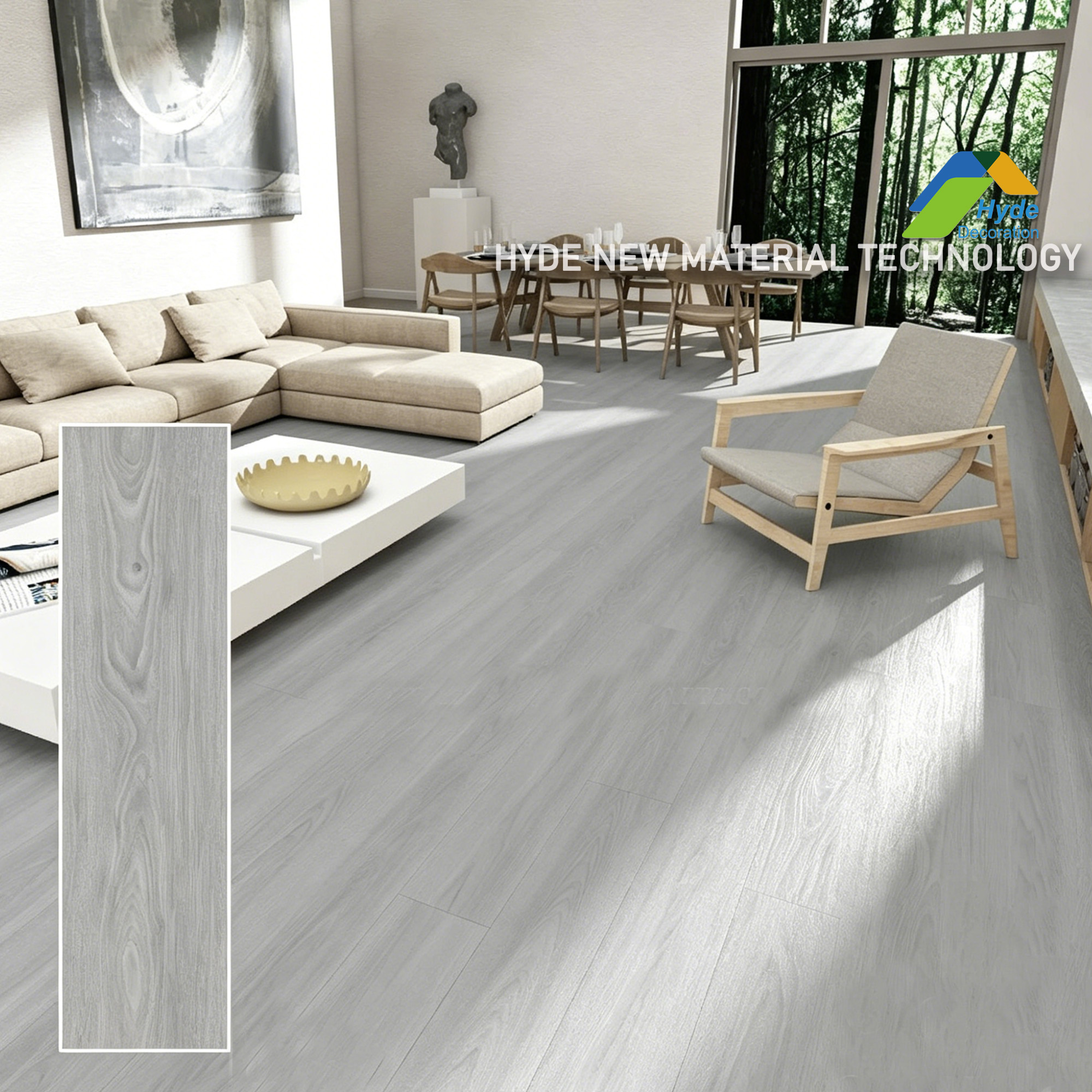
Scratch resistance and impact resistance measure two different types of durability. Laminate excels at scratch resistance. The aluminum oxide top layer is one of the hardest clear coatings available. It easily resists dog claws, sliding chairs, and abrasive dirt. If you have large, active pets, laminate keeps its pristine finish longer. You can drag heavy furniture across a high-quality laminate floor and rarely see a mark.
Rigid core planks utilize a clear vinyl wear layer. This layer is softer than aluminum oxide. Dragging heavy furniture without felt pads will scratch the surface. However, the stone composite dominates in impact resistance. If you drop a heavy cast-iron pan on laminate, the rigid, brittle surface often chips or cracks. Drop that same pan on a stone-core plank, and the dense limestone absorbs the kinetic energy. The floor rarely dents and almost never chips.
Understanding technical specifications dictates longevity. You must evaluate the SPC flooring size and wear layer thickness before purchasing. Wear layers typically range from 12 mil (0.3mm) to 22 mil (0.55mm) or higher. Thicker wear layers directly correlate to how long the floor will last under heavy foot traffic.
Wear Layer Thickness | Traffic Rating | Ideal Application Areas |
|---|---|---|
12 mil (0.3mm) | Light Residential | Guest bedrooms, home offices, closets |
20 mil (0.5mm) | Heavy Residential | Living rooms, hallways, kitchens, active households |
22 mil+ (0.55mm+) | Commercial | Retail stores, restaurants, high-traffic public spaces |
Plank thickness also matters. Overall thickness usually ranges from 4mm to 8mm. Thicker planks provide stronger locking joints. A 4mm plank requires a perfectly flat subfloor, or the thin joints will snap under pressure. A 6mm or 8mm plank bridges minor subfloor imperfections much better. Traditional solid hardwood allows you to sand and refinish the surface when it wears down. Modular click-lock floors do not offer this option. Once the wear layer degrades, you must replace the plank. The modular nature makes this lifecycle management straightforward. You can easily remove a damaged plank from the middle of the room and drop in a replacement without tearing up the entire floor.
Rigid core floors face frequent criticism for their underfoot feel. The material is dense and heavy. It feels hard when you walk on it. It also transfers temperature efficiently. If you install it directly over a cold concrete slab, the floor will feel cold to the touch. You mitigate this by choosing planks with an integrated underlayment. High-quality planks include a pre-attached pad made of IXPE or EVA foam. This closed-cell foam adds cushioning and creates a thermal break between the cold concrete and your feet. If your planks do not come with an attached pad, you must roll out a separate 1.5mm high-density underlayment. Never use thick, spongy foam under rigid planks, as the excessive compression will cause the locking joints to fail under heavy foot traffic.
Laminate naturally feels warmer. The wood-based core retains ambient room heat better than limestone. Laminate also provides a slight natural flex, making it marginally more comfortable to stand on for long periods, such as when cooking in a kitchen. Many homeowners prefer this slight give over concrete subfloors.
Acoustics play a massive role in perceived floor quality. Hard, floating floors create a hollow, clicking sound when you walk on them with hard-soled shoes. Industry professionals measure this using Sound Transmission Class (STC) and Impact Insulation Class (IIC) ratings. Higher numbers indicate better sound blocking. Laminate absorbs sound slightly better natively due to its wood mass. Stone composite requires a high-density underlayment to achieve acceptable acoustic ratings. The attached IXPE pad absorbs the impact energy, reducing the hollow echo and preventing sound from traveling to rooms below.
Thermal expansion requires careful management during installation. Large open-plan layouts expose floors to direct sunlight through windows. The sun heats the planks, causing them to expand. If the planks have nowhere to go, they push against each other and buckle upward. You must leave a 1/4-inch expansion gap around the entire perimeter of the room. For very large areas, you must install transition moldings to break up continuous runs longer than 30 feet. This allows the floor to expand and contract freely without damaging the locking mechanisms.
Site preparation dictates the success or failure of any flooring project. Rigid core planks are relatively thin and highly conforming. If your concrete subfloor has dips, bumps, or ridges, those imperfections will manifest through the surface of the floor. Installers call this telegraphing. A small pebble left on the concrete will create a visible hump in the finished floor. You must grind down high spots using a 7-inch diamond cup wheel attached to a grinder with a dust shroud. You must fill low spots with a Portland cement-based self-leveling compound. The industry standard requires the subfloor to be flat to within 3/16 of an inch over a 10-foot radius.
Many property owners attempt DIY installations because click-lock systems appear simple. The locking mechanism itself is easy to use. You will need a tapping block, a pull bar, and a non-marring rubber mallet to ensure the joints lock tightly without damaging the wear layer. The failure occurs in the prep work. If you install a rigid plank over an uneven floor, the plank will flex every time you step on it. Over a few weeks, that constant flexing fatigues the thin locking joint. The joint snaps, the planks separate, and the floor is ruined. Professional installers spend most of their time prepping the subfloor and only a fraction of their time actually laying the planks.
Renovation projects often involve installing over existing materials. You can successfully install waterproof SPC flooring over old ceramic or porcelain tiles. However, you cannot simply lay the planks down. Existing tiles have grout lines. If the grout lines are wider than 1/4 inch or deeper than 1/8 inch, the joints will sag into the grooves and break. You must skim-coat the entire tile floor with a floor patch compound to create a smooth, flush surface before installation. You also need to undercut door jambs and casings so the planks slide neatly underneath, allowing for proper expansion without binding.
Selecting the right material requires matching the floor's physical properties to the room's specific environment. Wet zones demand absolute moisture immunity. Kitchens, bathrooms, laundry rooms, and entryways see frequent spills, wet shoes, and high humidity. Stone composite is the non-negotiable standard for these areas. Using laminate in a full bathroom guarantees premature failure. The constant steam from showers will eventually penetrate the seams and swell the HDF core.
Living and sleeping quarters present a different environment. Bedrooms, living rooms, and dining rooms generally stay dry. In these spaces, laminate’s superior thermal comfort and realistic wood-grain acoustics often outweigh its moisture vulnerabilities. If you prioritize a warm floor and high scratch resistance against pet claws, laminate performs exceptionally well in dry zones.
Evaluating long-term durability requires looking past the initial installation. You must calculate replacement frequency and maintenance effort. A burst pipe or a leaking dishwasher destroys a laminate floor instantly. You have to rip it out, throw it away, and buy new materials. A stone-core floor survives the same plumbing disaster. You remove it, dry the area, and reuse the materials. Both floors require minimal daily maintenance. You sweep away loose dirt and use a damp mop with a pH-neutral cleaner. Never use steam mops on either material. The extreme heat forces moisture into the joints and degrades the wear layers.
Feature | Stone Plastic Composite | Laminate Flooring |
|---|---|---|
Core Material | Limestone and PVC composite | High-Density Fiberboard (HDF) |
Water Resistance | 100% Waterproof core | Water-resistant top; vulnerable core |
Scratch Resistance | Moderate (Vinyl wear layer) | High (Aluminum oxide layer) |
Impact Resistance | High (Absorbs heavy drops) | Moderate (Prone to chipping) |
Subfloor Prep Required | Extremely high (Requires perfect flatness) | Moderate (Forgives minor imperfections) |
Best Room Applications | Bathrooms, Kitchens, Basements | Bedrooms, Living Rooms, Hallways |
The choice between these two materials comes down to environmental control. If you cannot control the moisture in a room, you must choose a stone composite core. Its limestone base provides absolute immunity to water damage, humidity expansion, and heavy impacts. If you are installing in a dry, climate-controlled room and prioritize scratch resistance and a warmer underfoot feel, laminate remains a highly effective option.
Do not rely solely on online photos or marketing brochures. Order physical samples of both materials. Run a house key across the surface to test scratch resistance. Submerge the samples in a bucket of water overnight to observe how the cores react to moisture. Stand on them in bare feet to gauge the thermal transfer.
Take these actionable steps to finalize your flooring project:
Measure your room dimensions accurately and add a 10% waste factor to account for cutting and mistakes.
Hire a flooring contractor to conduct a calcium chloride moisture test on your concrete slab.
Check your subfloor flatness using a 10-foot straight edge, marking any dips or humps that require leveling.
Select a wear layer thickness that matches your household traffic, opting for at least 20 mil if you have pets or children.
A: It is truly 100% waterproof. The core consists of limestone powder and PVC plastics, containing zero organic wood materials. It will not absorb water, swell, or warp even if completely submerged. You can safely install it in high-moisture areas like bathrooms and basements without risking structural water damage.
A: Standard planks range from 48 to 60 inches in length and 7 to 9 inches in width. Overall thickness typically runs between 4mm and 8mm. Thicker planks provide significantly stronger click-lock joints, reducing the risk of separation over uneven subfloors. They also offer better acoustic insulation.
A: Yes, you can install it over existing ceramic or porcelain tiles. However, you must prepare the surface first. You need to fill all grout lines with a self-leveling compound or floor patch. If you leave deep grout lines unfilled, the joints will sag into the gaps and break under foot traffic.
A: High-quality planks emit very low levels of Volatile Organic Compounds (VOCs). Because the manufacturing process uses no glues in the core, it generally off-gasses less than traditional laminate. Always look for the FloorScore certification on the packaging. This guarantees the product meets strict indoor air quality standards for residential use.
A: Both require sweeping and damp mopping with a pH-neutral cleaner. The main difference is moisture tolerance during cleaning. You can use slightly wetter mops on stone composite without fear of damaging the joints. Laminate requires strict moisture control; you must dry any residual cleaning liquid immediately to prevent edge swelling.
A: Yes, most rigid core floors are compatible with embedded radiant heating systems. The dense stone core transfers heat efficiently. However, you must ensure the heating system does not exceed the manufacturer's temperature limit, usually capped at 85°F (29°C). Always use a dedicated floor temperature sensor to prevent overheating.