

close
Choose Your Site
Global
Social Media
Views: 0 Author: Site Editor Publish Time: 2026-09-30 Origin: Site


Optimizing outdoor partitions requires specifying the perfect material for the local micro-climate. Selecting materials engineered specifically to thrive in their designated environments ensures your structure enhances daily operations and maximizes your valuable resources. By matching the right architectural grade to your specific climate needs, you can achieve beautiful, long-lasting results that elevate any outdoor space.
This objective, engineering-focused guide will help architects, contractors, and homeowners navigate various high-performance partition materials. You will learn how to select the right panel based on verifiable durability metrics and long-term performance. We will explore everything from heavy-duty metal alloys to advanced structural polymers. By understanding the unique strengths of each material, you can confidently ensure your next project is a complete success.
Material selection should align with specific environmental profiles to maximize longevity and aesthetic appeal.
Metals offer superior wind-load capacity and provide a sleek, modern aesthetic for commercial zones.
An outdoor PVC partition panel provides exceptional resistance to moisture, making it optimal for wet climates, coastal areas, and poolside applications.
When evaluating any outdoor partition panel, durability goes far beyond basic impact resistance. Real-world longevity depends on how well the substrate harmonizes with continuous environmental exposure. We evaluate performance across four primary metrics.
UV Resistance & Colorfastness: A durable panel maintains its color and structural integrity under prolonged sun exposure. High-performance products utilize advanced UV inhibitors and acrylic cap-stock technologies to beautifully reflect solar radiation and maintain their pristine appearance.
Moisture Resistance: High-humidity environments and rain test exterior partitions. Premium materials provide robust resistance to moisture, ensuring long-lasting structural performance and a clean, pristine surface in any weather condition.
Wind Load Capacity: Outdoor structures catch wind and transfer kinetic energy to the framing. High-performance materials feature exceptional structural integrity and rigidity to accommodate wind shear gracefully and maintain their perfectly aligned appearance.
Thermal Adaptability: Temperature swings cause materials to naturally expand and contract. Understanding a material's thermal coefficient helps you design proper expansion gaps, allowing the panels to move smoothly and maintain their structural perfection year-round.
Choosing the right substrate involves matching its inherent physical advantages to your project's goals. We evaluate the most popular and effective partition options below.
Material Performance Highlights
Material Category | Primary Strength | Key Benefit | Best Application |
|---|---|---|---|
Fiber Cement | Fire and temperature resistance | Extreme structural stability | Robust permanent installations |
Metal (Steel/Alum) | High strength-to-weight ratio | Architectural rigidity | Commercial high-wind zones |
Wood-Plastic Composites | Aesthetic appeal, solid feel | Natural timber appearance | Premium residential spaces |
High-Grade PVC | Total moisture immunity | Lightweight and versatile | Coastal and pool areas |
Fiber cement offers immense stability. It combines Portland cement, sand, and cellulose fibers to create a rock-solid barrier.
Highlights: It provides exceptional fire resistance. It remains dimensionally stable under heat and is completely impervious to biological weathering, offering an incredibly substantial and permanent feel.
Architects often specify metal for structural screens and commercial dividers.
Highlights: Metal delivers the highest strength-to-weight ratio available. It provides a sleek, modern architectural aesthetic and offers premium structural rigidity for high-end commercial applications.
WPC beautifully blends recycled wood fibers and synthetic polymers.
Highlights: It successfully combines the highly desirable aesthetics of natural wood with enhanced synthetic longevity. The panels feel heavy, substantial, and offer an excellent eco-friendly profile for outdoor living spaces.
Modern structural polymers offer exceptional defense against water. A structural outdoor PVC partition panel is an incredibly versatile choice.
Highlights: It is 100% moisture resistant. It remains lightweight for easy, rapid handling and features robust profiles. For large structural spans, heavy-wall extrusions or internal aluminum reinforcements provide fantastic stability.
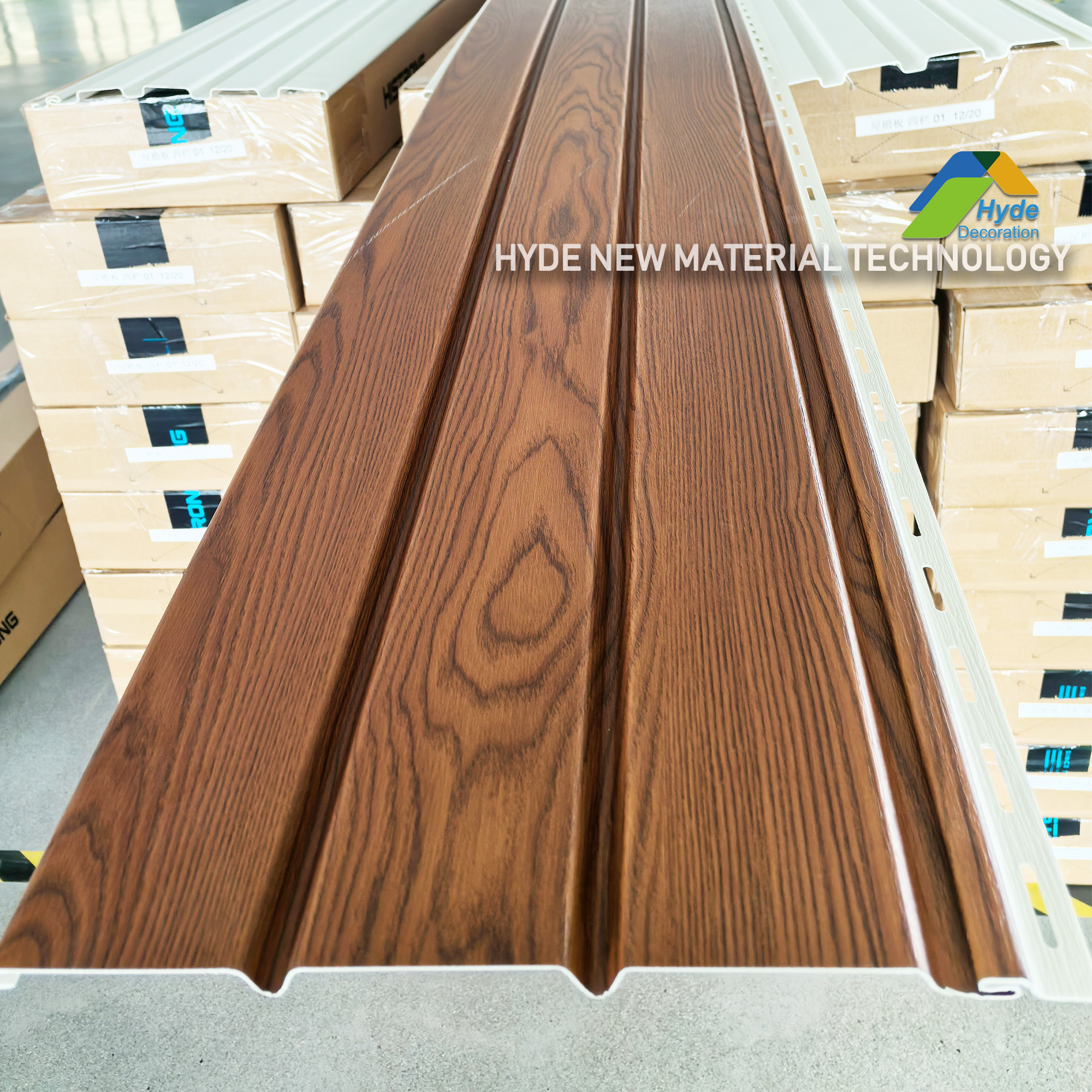
Engineered polymers dominate wet environments and offer incredible performance when specified correctly. Understanding the structural advantages of PVC ensures a magnificent installation.
You should prioritize polyvinyl chloride in environments where moisture resistance is paramount. It acts as the ideal, impenetrable barrier for coastal regions, high-humidity zones, and poolside applications. Unlike natural materials, PVC maintains a perfect core and surface year after year.
A genuine weatherproof PVC outdoor panel is built for excellence. Structural-grade panels integrate heavy protective capping. Premium specifications include high levels of titanium dioxide (TiO2) additives. TiO2 acts as a powerful, permanent sunscreen for the plastic, keeping the colors vibrant and the structural integrity perfect.
PVC panels are engineered for optimal flexibility and resilience. By designing proper framing to support them, you maximize their performance. Installers simply follow support spacing guidelines to create a rigid, perfect wall. Furthermore, by leaving precise expansion gaps at the panel ends and utilizing appropriate fastener tension, the installation gracefully accommodates natural thermal movement, ensuring long-term perfection.
Matching the physical properties of the partition to the specific demands of your project site guarantees an incredible outdoor space.
Rooftop installations are beautifully served by heavy-gauge aluminum or reinforced fiber cement. Aluminum provides excellent rigidity without overloading the roof structure, while fiber cement offers immovable mass and a premium architectural feel. Utilizing engineered structural anchors creates a wonderfully secure environment.
In coastal zones, prioritize structural PVC or marine-grade aluminum. These materials naturally thrive in salt-rich air, offering pristine appearances season after season. They provide peace of mind and maintain their high-end finishes flawlessly near the ocean.
Homeowners love beautiful aesthetics and minimal upkeep. An outdoor balcony PVC panel or a high-quality WPC serves as a magnificent choice. They look fantastic, feature gorgeous textures, and install efficiently on multi-story balconies. They provide excellent visual screening while perfectly complying with standard residential design requirements.
Evaluating the installation process and ongoing care helps you choose a material that fits perfectly into your lifestyle and facility management plans.
Lighter materials, such as PVC and aluminum, offer significant efficiencies in labor and equipment, allowing for rapid project completion. Heavier materials like fiber cement provide an incredibly solid, permanent feel that beautifully justifies their robust and specialized installation process.
Every material has a simple routine to keep it looking its absolute best:
Wood: Rewards you with natural beauty when treated with premium stains and sealants.
WPC: Stays fresh and inviting with a simple seasonal washing.
Metals: Maintain their sleek, industrial look with basic cleaning and standard surface care.
PVC: Offers ultimate convenience, requiring just an occasional gentle wash using mild soap and a soft bristle brush to maintain its factory-new appearance.
Use a step-by-step decision matrix to drive your final procurement. First, identify your climate profile (e.g., coastal, high-wind, sunny). Second, evaluate your structural preferences and select materials that harmonize with your framing plans. Finally, match your aesthetic desires to the material that offers your preferred maintenance routine, ensuring a perfect fit for your lifestyle.
Durability and beauty go hand-in-hand when you match the right substrate to your micro-climate. By thoughtfully selecting a material engineered for your specific environment, you ensure a stunning, highly functional partition that will elevate your property for years to come.
Actionable Next Steps:
Review manufacturer warranties to see the incredible long-term backing offered for your specific climate.
Request physical material samples to experience the premium textures and brilliant colors in your actual outdoor lighting.
Review technical specification sheets to easily design the perfect framing and expansion plan for your chosen material.
Consult local HOA guidelines and municipal building codes to seamlessly integrate your beautiful new panels into your neighborhood.
A: A high-quality commercial partition provides decades of reliable service. Powder-coated aluminum and UV-stabilized PVC typically perform beautifully for 25 years or more, offering an exceptional return on investment and enduring aesthetic appeal.
A: Exceptionally well! High-grade architectural PVC incorporates titanium dioxide and advanced UV stabilizers. These premium additives effectively reflect solar radiation, ensuring the panel remains structurally sound and visually vibrant through years of direct sunlight.
A: This depends on local municipality codes and the panel's function. Many decorative privacy screens are easily installed without permits. For structural railings or large-scale wind barriers, a simple permitting process ensures your beautiful new installation perfectly meets all local engineering standards.
A: Aluminum and high-grade PVC are celebrated for their ultimate convenience. Both materials naturally resist the elements beautifully. PVC, in particular, only requires a gentle wash with mild soap and water to clear away seasonal dust, keeping it looking immaculate with minimal effort.