
close
Choose Your Site
Global
Social Media
Views: 0 Author: Site Editor Publish Time: 2026-11-02 Origin: Site


The ongoing debate between aesthetic preference and functional longevity in bathroom wall cladding often leaves property owners paralyzed. You must define the objective difference between how a surface looks and how it performs under constant moisture exposure. The core challenge lies in terminology. Manufacturers frequently conflate "waterproof" with "moisture-resistant." Substrate integrity matters far more than the surface finish. A failed substrate will destroy any covering, regardless of the material applied over it.
The purpose of this guide is to provide a technical framework. Homeowners and contractors can use this data to evaluate if Waterproof Bathroom Wall Panels or traditional tiles serve their specific moisture exposure and budget requirements. We will analyze material science, installation risks, structural dependencies, and long-term maintenance realities.
Substrate Dependence: Neither system performs effectively without a correctly tanked substrate; the "waterproof" claim refers to surface permeability, not total wall assembly.
The Grout Variable: Tiles fail primarily at the grout line; panels succeed by removing the grout variable entirely, resulting in lower maintenance requirements.
Cost vs. Value: Tiles typically hold higher resale value in luxury markets, while panels offer significant labor cost savings and faster installation turnarounds.
Application Context: Distinguish between "splash-zone" usage (panels) and "high-pressure wet room" requirements (where specific tile substrates may be preferred).
Moving beyond marketing terms requires looking at technical standards. ASTM and ISO moisture resistance ratings define true waterproofing capabilities. A material must block water vapor transmission entirely, not just repel liquid water on its face. Many ceramic tiles are waterproof, but the assembly they rely on is highly permeable. True waterproofing means creating an impermeable envelope that prevents moisture from reaching the structural framing of the building.
The wall behind the covering dictates the lifespan of either system. This is the substrate equation. Cement board, moisture-resistant drywall, or liquid tanking membranes form the actual defensive barrier. If water bypasses the surface, the substrate must handle the intrusion. Neither panels nor tiles will survive on untreated standard drywall in a wet zone. Gypsum cores dissolve when exposed to sustained moisture. Proper tanking involves applying a liquid membrane or sheet membrane over the backing board before any decorative surface is installed.
Surface permeability differs drastically from system integrity. We must analyze how panels eliminate seam vulnerabilities. Traditional tile relies heavily on grout. Grout is inherently porous and acts like a hard sponge. It invites capillary action. Water wicks through degraded tile grout into the wall cavity. Even epoxy grouts, which resist water better than cementitious grouts, can separate from the tile edge due to structural settlement. Panels bypass this issue by utilizing mechanical interlocking joints or specialized trims that do not rely on porous binders.
Seamless panel installations offer a continuous surface advantage. They prevent water ingress in corners and junctions. These areas represent inherent weak points in tiled layouts. Movement in the building structure often cracks rigid grout joints at internal corners. Panels flex slightly with the building, maintaining the integrity of the perimeter seal. By reducing the number of joints from hundreds to just a few, the statistical probability of a water leak drops significantly.
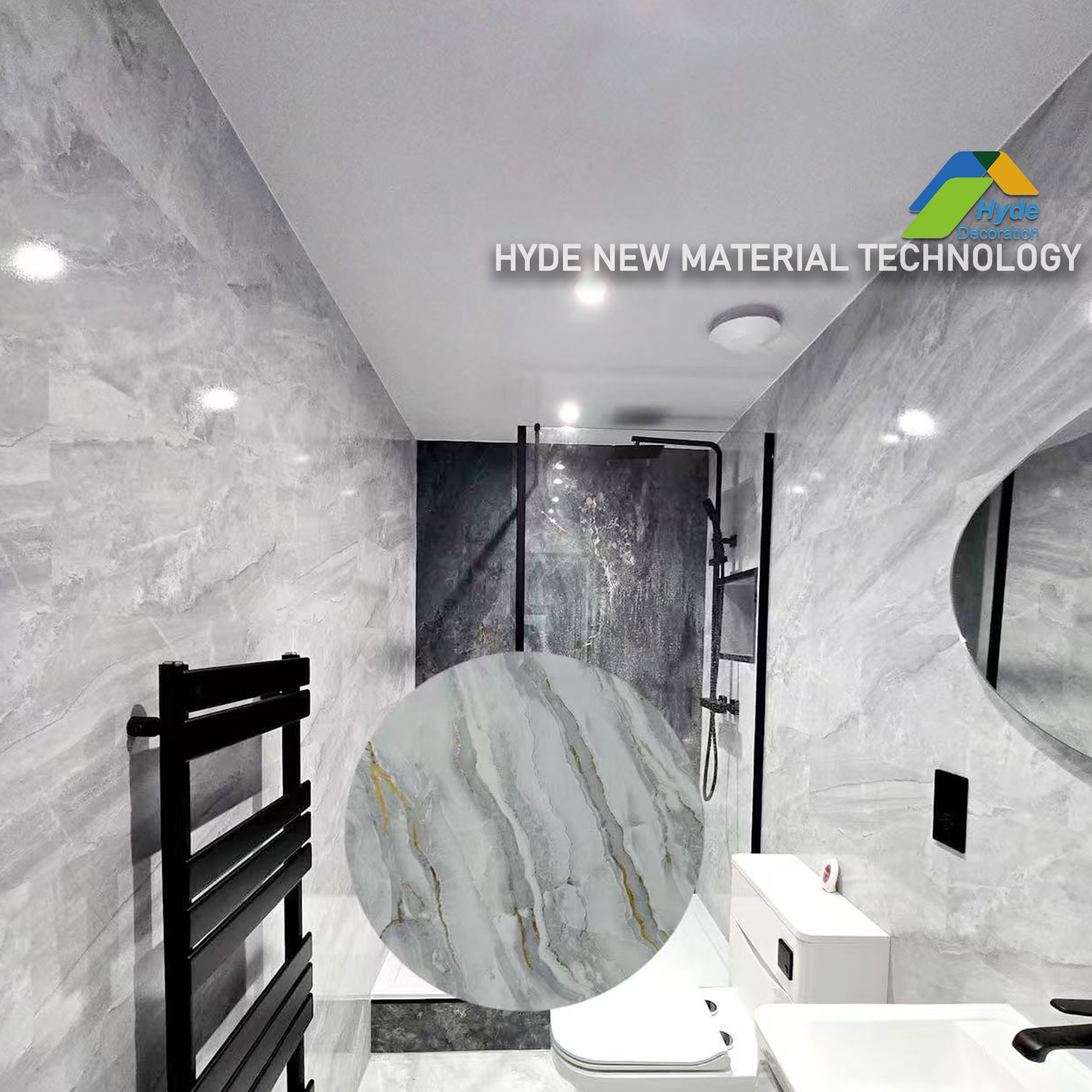
Differentiating between materials is critical for project success. You can choose from PVC wall panels, acrylic surrounds, and high-pressure laminate (HPL) systems. Acrylic offers a high-gloss finish but can be brittle during cutting. HPL provides a solid exterior grade core with excellent rigidity and impact resistance. Modern waterproof PVC bathroom wall panels utilize an extruded cellular core structure. This engineering makes them lightweight, easy to manipulate, and completely impervious to water saturation.
These systems excel in high-moisture environments. They eliminate mold-prone grout lines entirely. Panels are the preferred choice for allergy sufferers and facilities requiring strict hygiene standards. Low-maintenance households benefit from the simple wipe-clean surface. You do not need harsh chemical scrubbers to maintain the finish.
Thermal expansion and contraction tolerances differ significantly between materials. PVC expands with ambient heat and hot water exposure. Rigid tile does not. Proper panel installation accommodates this movement through specific expansion gaps hidden within perimeter profiles. This flexibility prevents the surface from cracking under thermal shock.
Consider the aesthetic spatial impact. Seamless panel patterns create the illusion of larger spaces. They remove the visual grid created by contrasting grout lines. This results in less cluttered, highly streamlined bathroom designs. Large format panels draw the eye upward, making standard ceiling heights feel more expansive.
However, limitations and risks exist. UV stability is a primary concern. Cheap PVC formulations risk yellowing over time when exposed to direct natural light through a bathroom window. Surface abrasion resistance is generally lower than ceramic. Panels are susceptible to scratching from abrasive cleaning pads or aggressive scrubbing compounds.
You must also navigate the aesthetic ceiling. Avoid the "plasticky" look by selecting high-quality decor foils. Premium prints mimic natural stone, concrete, and wood grain convincingly. Low-resolution prints will instantly cheapen the look of the renovation. Always request physical samples to evaluate the texture and light reflection before ordering full sheets.
Porcelain and ceramic offer unmatched surface hardness. They set the benchmark for density and scratch resistance in residential construction. Heavy-traffic bathrooms benefit from this extreme durability. A dropped showerhead or heavy shampoo bottle will rarely chip a high-grade porcelain tile. The firing process creates a glaze that is virtually impervious to chemical staining.
The physics of grout degradation present a harsh reality. Grout requires a strict, ongoing maintenance lifecycle. You must maintain a waterproof seal through the regular application of penetrating sealers. Hard water deposits, body oils, and soap scum degrade the cementitious binders in standard grout. This chemical attack leads to micro-cracking, discoloration, and eventual water penetration. Once water gets behind the tile, it degrades the thinset mortar, leading to loose tiles and structural rot.
Professional tiling requires highly skilled labor. Installation complexities multiply quickly on site. You must account for adhesive curing times before grouting can commence. The process involves multi-stage leveling, cutting, setting, grouting, and sealing. Walls must be perfectly plumb and flat. Lippage between large-format tiles creates sharp edges, traps water, and ruins the aesthetic lines of the shower enclosure.
Design flexibility remains the strongest argument for traditional tiles. You have infinite versatility regarding patterns, layouts, and textures. Herringbone, chevron, and basketweave patterns offer bespoke customization. Large-format tile trends provide a tactile, high-end feel. Panels currently struggle to replicate the exact depth, texture, and light refraction of natural tumbled stone, marble mosaics, or handmade zellige tiles.
Evaluating waterproof bathroom wall panels vs tiles requires a direct feature-to-outcome comparison. The table below outlines the operational differences between the two systems.
Feature | Wall Panels | Traditional Tiles |
|---|---|---|
Installation Speed | Rapid. Often completed in 1 to 2 days. No curing time required between stages. | Slow. Requires 5 to 7 days for setting, curing, grouting, and sealing. |
Maintenance Burden | Low. Requires regular wiping with non-abrasive cleaners. No grout to scrub. | High. Requires annual grout sealing and aggressive scrubbing to remove mold. |
Lifecycle Cost Analysis | Lower initial labor costs. Minimal long-term maintenance expenditure. | Higher initial skilled labor costs. Ongoing costs for sealers and grout repair. |
DIY Feasibility | High. Forgiving for competent DIYers. Large coverage area minimizes alignment errors. | Low. Requires specialized tools, wet saws, and deep knowledge of mortar consistency. |
Scenario A focuses on the rapid property refresh. waterproof bathroom wall panels for showers are the superior tactical choice here. They suit budget-constrained, time-sensitive renovations perfectly. You can return the bathroom to service rapidly, often within 24 hours of completion. This approach minimizes disruption in single-bathroom homes. It also allows property managers to turn over rental units quickly without sacrificing moisture protection.
Scenario B involves the high-end wet room. Determine when structural durability outweighs installation convenience. The aesthetic prestige of porcelain tiling often wins in luxury residential builds. Custom recessed niches, complex bench seating, and sloped ceiling details require the modularity of tile. Small mosaic tiles conform to the steep pitches required for curbless shower floor drains. Panels cannot bend to accommodate complex, multi-angled architectural features.
Environmental suitability matters immensely. Match the material to the room's specific thermal dynamics. Steam showers require specific high-heat rated panels or traditional stone. Standard PVC may warp or delaminate under the intense, sustained heat of a commercial steam generator. Specific tile substrates handle extreme temperature fluctuations better. Conversely, in unheated cabins or properties prone to freezing, panels flex without cracking, whereas frozen moisture can shatter rigid tiles.
Assess long-term property value implications. Each material type impacts buyer perception during a home appraisal. Local real estate markets dictate preferences. High-end neighborhoods often expect custom tile work as a baseline standard. Mid-range homes benefit greatly from the clean, modern look of upgraded panels. Buyers in starter homes often prefer the low-maintenance aspect of panels over the prospect of scrubbing old grout.
Identifying material quality prevents catastrophic failures. Spot low-grade PVC panels by checking the core density. Squeeze the edge of the panel; if it crushes easily between your fingers, it lacks structural integrity. Flimsy panels fail prematurely. They suffer from surface delamination when exposed to hot water over several years. Invest in panels with a thick face wall and a dense cellular structure to ensure impact resistance.
Prevent common installation pitfalls to ensure longevity. Leaks occur most frequently at internal corners, external corners, and base junctions. The connection between the wall and the shower pan is highly vulnerable. Use professional-grade extruded aluminum or PVC profiles and flashings. Never rely on a thick bead of silicone alone to bridge a large structural gap. The profile provides the mechanical barrier; the silicone provides the flexible seal.
Understand the critical importance of sealants in panel systems. Follow strict best practices for silicone selection. Use only 100% sanitary grade, mold-resistant silicone. This ensures true waterproof barrier performance at perimeter joints. Standard decorators caulk or acrylic sealants will dissolve and wash away in wet zones. Apply the silicone to the inside of the trim profiles before inserting the panel to create a hidden, watertight gasket.
Verify professional standards before hiring. Installers must be familiar with traditional tanking methods. They must also follow manufacturer-specific panel mounting requirements. Incorrect adhesive patterns will void warranties. Adhesives must be applied in vertical beads, not horizontal loops, to allow any trapped condensation behind the panel to escape downward. Ensure the contractor uses high-grab, solvent-free adhesives compatible with the panel material.
Neither system is universally superior. Both are objectively different in function, installation methodology, and long-term maintenance. Traditional tiles offer unmatched design flexibility and extreme surface hardness but demand rigorous upkeep. Wall panels provide rapid installation, zero grout maintenance, and a seamless aesthetic but require careful handling to prevent surface scratches.
Use the installation timeline, desired aesthetic, and moisture frequency of the shower area as your primary decision levers. Verify your contractor's competency before committing to either system. Ask for specific examples of their waterproofing methods and substrate preparation techniques.
Take the following steps to finalize your project planning:
Inspect your current wall substrate for existing moisture damage, rot, or mold before selecting a new surface material.
Request physical samples of wall panels to test their rigidity, print quality, and scratch resistance in your own home.
Calculate the labor hours required for both options based on your local contractor rates to understand the true final cost.
Review the manufacturer's warranty regarding approved adhesives, sealants, and cleaning chemicals.
A: The panels themselves are 100% waterproof and will not absorb moisture. However, the overall installation is only as waterproof as the seals. The joints, corners, and base junctions must be properly sealed with sanitary silicone and manufacturer-approved profiles to create a fully watertight environment.
A: Yes. You must use a high-grab, solvent-free adhesive recommended by the panel manufacturer. Solvent-based adhesives can melt or degrade the PVC core. The adhesive must also accommodate slight thermal expansion and contraction without losing its bond to the substrate.
A: Yes, panels can be installed over existing tiles, provided the tiles are sound, flat, and firmly attached to the wall. However, this overlay method risks trapping existing moisture. It is always safer to remove old tiles to inspect and repair the underlying substrate.
A: Shower wall panels are generally cheaper when factoring in total project costs. While premium panels can rival mid-range tiles in material price, the labor savings are substantial. Panels install in a fraction of the time, eliminating the multi-day labor costs associated with grouting and sealing tiles.
A: Early generations of panels looked artificial. Today, advancements in high-definition laminate prints and textured surfaces create highly realistic finishes. Premium panels accurately mimic the visual depth of marble, the grain of wood, and the matte finish of concrete without the associated maintenance.
A: High-quality sanitary silicone in a well-ventilated bathroom typically lasts 5 to 7 years before requiring replacement. Inspect the perimeter seals annually. If the silicone begins to peel, discolor, or show signs of black mold, it should be stripped and reapplied to maintain the waterproof barrier.
A: Standard PVC panels are not suitable for steam showers due to high-heat limitations, which can cause warping. For steam rooms or heavy-duty commercial wet rooms, you must use specialized high-pressure laminates or solid surface materials specifically rated for extreme temperatures and continuous moisture exposure.