

close
Choose Your Site
Global
Social Media
Views: 0 Author: Site Editor Publish Time: 2026-08-19 Origin: Site


Composite materials have replaced traditional timber and pure plastics on many commercial and residential job sites. They offer the visual texture of real wood without the constant maintenance and weather degradation. However, specification errors happen frequently in the field. Project managers and purchasing teams often treat all composites as identical products. This mistake leads to premature material failure, building code violations, and warped facades. You need to understand the exact chemical and physical makeup of a WPC wall panel to evaluate its durability and project suitability. By analyzing the core ingredients, polymer types, and manufacturing techniques, you can specify the right architectural profile for your structural requirements. We will break down the exact composition of these panels, how they are manufactured, and what that means for on-site performance and long-term stability.
Standard Composition: Premium WPC (Wood-Plastic Composite) typically consists of a precise ratio: roughly 30-60% wood fiber/flour, 30-40% thermoplastic polymers, up to 20% minerals (for structural rigidity), and up to 10% chemical additives.
Polymer Variations Dictate Use: The choice between HDPE (High-Density Polyethylene) and PVC (Polyvinyl Chloride) fundamentally alters the panel's rigidity, fire rating, and weather resistance.
Profile Engineering: The manufacturing process (extrusion and high-pressure pressing) allows the same base material to be molded into diverse architectural forms, including the WPC fluted panel and WPC grille board.
Specification Criteria: Evaluating a panel requires analyzing its Material Safety Data Sheet (MSDS) for UV stabilizers, coupling agents, and verified recycled content.
The organic foundation of wood-plastic composites relies heavily on recycled solid wood particles. Manufacturers source these materials from lumber mill byproducts, utilizing sawdust, wood flour, and occasionally bamboo powder. The particle size is strictly controlled during processing. Fine wood flour passes through specific mesh screens, typically between 60 and 80 mesh, to ensure uniform distribution within the plastic matrix. This organic component provides natural texture and allows the panel to authentically mimic real wood.
Beyond aesthetics, wood fibers increase the tensile strength of the final product. They provide structural stiffness that pure plastics lack. Utilizing reclaimed wood also significantly reduces the overall carbon footprint of the building material. Before mixing, the wood particles must undergo a rigorous moisture extraction process. Industrial dryers reduce the moisture content of the wood flour to below one percent. If moisture remains in the wood cells, it will turn to steam during the high-heat extrusion phase. This trapped steam causes internal blistering and catastrophic structural weakness in the finished profile.
Organic Filler Type | Source Material | Impact on Composite Performance |
|---|---|---|
Hardwood Flour (Oak, Maple) | Furniture manufacturing byproducts | High density, excellent structural rigidity, harder to extrude due to density. |
Softwood Flour (Pine, Cedar) | Lumber mill sawdust | Lower density, easier melt-flow during extrusion, requires more coupling agents. |
Bamboo Powder | Rapidly renewable bamboo stalks | Exceptional tensile strength, highly sustainable, naturally resistant to some pests. |
Thermoplastic polymers serve as the binding matrix. They encapsulate the organic wood fibers to provide absolute moisture resistance. The plastic component surrounds each wood particle, sealing it off from environmental humidity and direct water exposure. This physical barrier prevents the composite from rotting, swelling, or supporting fungal growth.
The sourcing of these polymers varies based on the manufacturer's sustainability goals and performance targets. Some formulations use virgin polymers for maximum consistency and predictable melt-flow indices. A predictable melt-flow index ensures the plastic coats the wood fibers evenly without requiring excessive heat. However, many high-grade panels utilize post-consumer recycled plastics. Diverting PE (Polyethylene) or HDPE (High-Density Polyethylene) plastic bottle waste from landfills serves a dual purpose. It reduces environmental waste and can contribute directly to LEED credits in commercial construction projects. The quality of the recycled plastic must be high, requiring thorough washing and sorting to remove contaminants that could weaken the composite structure.
While wood and plastic form the bulk of the panel, a precise blend of additives and minerals dictates the material's long-term field performance. These components typically make up the remaining 10 to 30 percent of the total volume. Without these chemical agents, the wood and plastic would separate under physical stress.
Coupling Agents: Wood is naturally hydrophilic, meaning it absorbs water. Plastic is hydrophobic, meaning it repels water. Without intervention, these two materials will not bond. Coupling agents, such as Maleic anhydride grafted polyethylene (MAPE), bridge this gap. They create a molecular bond between the wood fibers and the polymer chains, ensuring the composite acts as a single, cohesive material under stress.
UV Stabilizers and Colorants: For exterior applications, photo-degradation is a primary concern. Hindered Amine Light Stabilizers (HALS) are mixed into the compound to absorb or reflect harmful ultraviolet radiation. This prevents the plastic matrix from becoming brittle and stops the color pigments from fading under direct sunlight.
Fire Retardants: Compliance with commercial building codes often requires specific fire ratings. Halogen-free fire retardants suppress flame spread and reduce smoke generation, helping panels meet ASTM E84 Class A or Class B ratings.
Anti-Fungal Agents: These provide secondary protection against mold and mildew in highly humid environments, protecting the surface from biological staining.
Calcium Carbonate: This mineral filler can constitute up to 20 percent of the mixture. Calcium carbonate increases the structural rigidity of the panel. It improves impact resistance and helps control the thermal expansion coefficient, ensuring the panels do not warp excessively during temperature fluctuations.
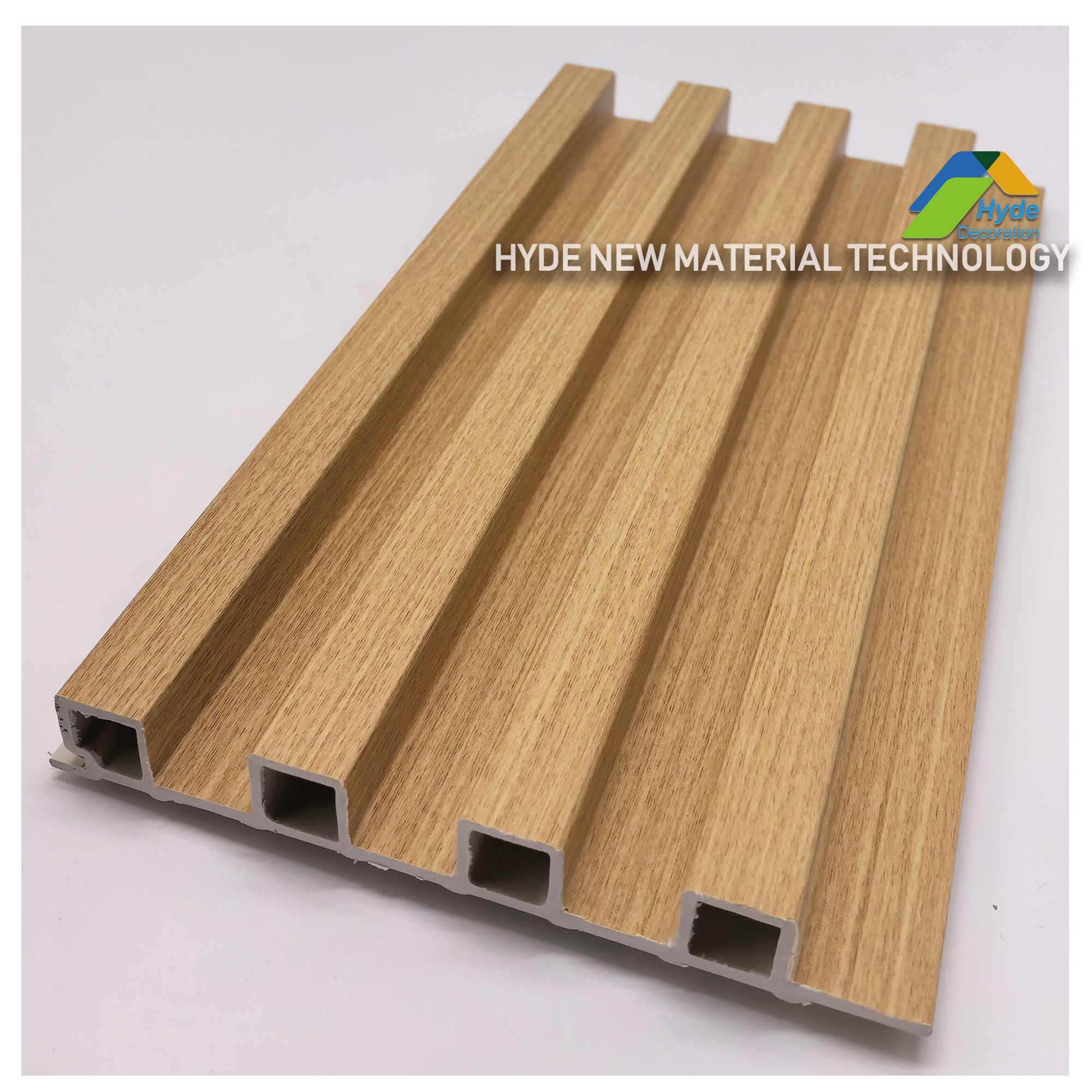
High-Density Polyethylene is a semi-crystalline polymer known for its exceptional toughness. When used as the binding matrix in a composite panel, HDPE provides superior tensile strength and excellent temperature tolerance. It handles freeze-thaw cycles effectively without fracturing. This makes HDPE-based composites highly suitable for heavy-duty exterior applications, including facade cladding and outdoor decking. The molecular structure of HDPE allows it to absorb impact energy, reducing the likelihood of cracking under blunt force from hail or job site debris.
Polyvinyl Chloride offers a different set of mechanical properties. PVC is an amorphous polymer, which gives it higher inherent rigidity compared to HDPE. One of the most significant advantages of PVC is its natural fire resistance. The chlorine content in PVC makes it self-extinguishing, meaning it will not support combustion once the primary flame source is removed. Because of this high rigidity and excellent fire rating, PVC is the dominant polymer used in interior-grade architectural features. When specifying a WPC grille board for a commercial lobby, PVC provides the crisp, sharp edges and dimensional stability required for precise interior detailing.
Selecting the right polymer matrix requires a clear understanding of the project's specific demands. You must weigh the trade-offs between mechanical flexibility, fire safety, and environmental impact. Using the wrong polymer for a specific environment guarantees premature failure.
Performance Metric | HDPE Matrix | PVC Matrix |
|---|---|---|
Structural Rigidity | Moderate (Flexible under high stress, resists impact) | High (Stiff, holds complex architectural shapes well) |
Fire Rating | Combustible (Requires heavy retardant additives to pass code) | Naturally self-extinguishing (Easier to achieve Class A) |
Thermal Expansion | Higher expansion coefficient (Requires larger gaps) | Lower expansion coefficient (More stable in climate-controlled indoors) |
Weather Resistance | Excellent (Handles extreme cold and UV degradation well) | Moderate (Can become brittle in freezing outdoor temperatures) |
Recyclability | High (Easily melted and reformed into new products) | Moderate (Chlorine content complicates the recycling process) |
The manufacturing process begins with high-temperature compounding. The dried wood flour, thermoplastic polymers, minerals, and chemical additives are fed into a high-shear mixer. This equipment blends the raw materials under intense heat and extreme pressure. The friction and external heating elements melt the plastics, allowing the coupling agents to bond the polymer chains to the wood fibers. The result of this compounding phase is a homogenous, ultra-dense composite material. This molten mixture is typically cooled and cut into small pellets, which serve as the standardized raw material for the next phase of production.
The composite pellets are reheated and processed through heavy-duty extrusion machinery to form the final architectural panels. Manufacturers typically use twin-screw extruders because they provide superior mixing and shear force for highly filled composite materials.
Raw Material Feeding: The standardized composite pellets are loaded into a hopper and fed into the heated barrel of the twin-screw extruder.
Melting and Compounding: As the screws turn, the pellets are subjected to temperatures ranging from 180°C to 200°C. The material reaches a viscous, molten state.
Die Extrusion: The rotating screws push the heated composite material through a custom-machined steel die. The die shapes the continuous linear profile of the panel, forming the internal webbing and exterior faces.
Vacuum Calibration and Cooling: As the material exits the die, it enters a vacuum calibration tank. Here, it is rapidly cooled with chilled water while vacuum pressure holds the material against sizing plates to lock in its final dimensions and prevent warping.
Cutting and Stacking: The continuous profile is pulled down the line by caterpillar haul-offs and cut to specific lengths by an automated saw before being stacked for curing.
Co-extrusion represents an advanced manufacturing process. Co-extrusion utilizes two extruders simultaneously. The primary extruder forms the standard composite core, while a secondary extruder applies a 360-degree protective polymer shield over the core material. This outer cap contains concentrated UV inhibitors and advanced resins. It provides maximum stain, scratch, and fade resistance, significantly extending the lifespan of exterior panels.
The design of the extrusion die dictates the final product. Advanced tooling allows manufacturers to create complex geometries without compromising structural integrity. By engineering specific internal webbing and hollow chambers, the extrusion process can produce lightweight yet highly rigid structures. This technology enables the creation of intricate designs like a WPC slat wall panel, which requires precise dimensional tolerances to ensure seamless interlocking during installation.
Once the continuous profile is extruded and cooled, it undergoes post-extrusion surface treatments to enhance its aesthetic appeal. The raw plastic sheen is removed through mechanical sanding or wire brushing. This exposes the subtle texture of the wood fibers near the surface. For a more authentic look, heavy steel rollers press deep, 3D wood grain patterns into the surface while the material is still slightly warm. These embossing techniques create a final aesthetic that rivals natural timber, providing tactile depth and visual realism.
The primary performance advantage of composite materials stems directly from their chemical composition. The physics of plastic encapsulation prevents water absorption at a cellular level. Because the hydrophilic wood fibers are completely surrounded by hydrophobic polymers, moisture cannot penetrate the core of the panel. High-quality composites typically exhibit a water absorption rate of less than 1% after 24 hours of submersion. This eliminates the risk of warping, swelling, or splitting that plagues traditional timber. Furthermore, the lack of accessible organic material and the presence of synthetic plastics render the panels impervious to termite damage and wood-boring insects.
All composite materials experience thermal movement. They expand in the heat and contract in the cold. The extent of this movement is dictated by the specific ratio of wood to plastic, combined with the volume of mineral fillers. A higher plastic content generally leads to greater thermal expansion. Manufacturers use calcium carbonate and precise wood fiber ratios to lower the overall expansion coefficient. Understanding this material behavior is critical for installers, who must leave appropriate expansion gaps at butt joints to prevent the panels from buckling under thermal stress.
Temperature Change (Fahrenheit) | Required Gap per 10-Foot Board | Installation Implication |
|---|---|---|
20°F Swing | 1/16 inch | Minimal movement, standard hidden fasteners are sufficient. |
40°F Swing | 1/8 inch | Noticeable movement, ensure butt joints are not tight. |
60°F Swing | 3/16 inch | Significant movement, requires careful planning of expansion joints. |
80°F+ Swing | 1/4 inch | Extreme environments, mandate slotted fasteners and large gaps. |
The physical density of the composite material contributes to its acoustic performance. Dense materials naturally block sound transmission. When this high density is combined with the hollow-core design of specific architectural profiles, the acoustic benefits multiply. The trapped air within the hollow chambers acts as a sound dampener, reducing reverberation in interior spaces. This makes a WPC fluted panel an excellent choice for commercial lobbies, conference rooms, or home theaters where acoustic control is necessary. Additionally, these hollow chambers provide a degree of thermal insulation, slowing the transfer of heat through the wall assembly.
Not all composite panels are manufactured to the same standards. A common failure point originates from manufacturers using excessive amounts of calcium carbonate to reduce production costs. While a precise amount of this mineral (up to 20%) improves rigidity, exceeding this threshold turns the calcium carbonate into a cheap filler. This over-saturation compromises the polymer matrix, making the panels highly brittle. These low-quality panels are prone to cracking during installation and will suffer from severe surface chalking when exposed to weather.
Always request technical data sheets from the manufacturer. Verify the wood-to-plastic-to-mineral ratios. Premium panels will clearly state their composition percentages and provide testing data for impact resistance.
Specification errors frequently lead to rapid material degradation. A major risk involves using uncapped, interior-grade PVC panels in high-UV exterior environments. Interior PVC lacks the heavy concentration of UV stabilizers required to withstand direct sunlight. If installed outdoors, these panels will quickly fade, become brittle, and eventually shatter under minor impacts.
Establish strict procurement guidelines. Separate interior decorative use from exterior cladding requirements. Ensure that any panel specified for outdoor use features a co-extruded protective cap and verified UV resistance testing.
The high density and thermal expansion characteristics of WPC require specific installation techniques. Traditional carpentry methods, such as face-nailing through the material with a pneumatic gun, will cause the panels to crack. Furthermore, rigidly fixing the panels prevents natural expansion and contraction, leading to severe buckling across the wall surface. Boards must also be allowed to acclimate to the job site environment for 48 to 72 hours prior to installation.
Utilize the manufacturer's specified fastening systems. This typically involves hidden stainless-steel clips that secure the panels to the furring strips while allowing them to slide laterally during temperature changes. Always pre-drill oversized holes if face-fastening is absolutely necessary, and use pan-head screws rather than bugle-head screws to prevent driving the fastener too deep into the dense composite.
Request physical material samples to evaluate surface density and capping thickness before approving the submittal.
Review the manufacturer's technical data sheets to confirm the mineral filler percentage remains below 20 percent to avoid brittle boards.
Demand third-party testing certifications for fire ratings and UV resistance to ensure compliance with local building codes.
Consult with the installation team to verify they have the correct hidden fastening systems required to accommodate thermal movement.
A: Typically 30% to 60%, usually in the form of recycled wood flour or solid wood fibers, depending on the manufacturer's specific formula and desired structural rigidity.
A: PVC panels are 100% plastic, offering high moisture resistance but looking less natural. WPC contains wood fibers, providing a more authentic wood aesthetic, better acoustic properties, and higher structural rigidity.
A: High-quality WPC often utilizes post-consumer recycled thermoplastics, such as reclaimed PE or HDPE from plastic bottles, actively diverting waste from landfills and supporting sustainable building practices.
A: Yes, but only if specified as exterior-grade. Exterior panels must utilize UV stabilizers and ideally feature a co-extruded protective cap to prevent fading and weather degradation.
A: Unlike traditional engineered woods (MDF/plywood), premium WPC panels do not use formaldehyde-based adhesives, relying instead on heat, pressure, and thermoplastic binding agents.
A: The inclusion of anti-oxidants, UV inhibitors, and a balanced plastic-to-wood-to-mineral ratio prevents rot, splintering, and fading, allowing panels to last 15-25+ years with minimal maintenance.