

close
Choose Your Site
Global
Social Media
Views: 0 Author: Site Editor Publish Time: 2026-09-09 Origin: Site


Homeowners and property developers constantly weigh the upfront speed of grout-free cladding against the long-term durability of plastics in high-moisture environments. You need to know if the rapid installation of these systems will be negated by premature warping, fading, or water ingress requiring early replacement. We evaluate panel lifespans objectively, isolating the specific variables that dictate longevity. Panel thickness, UV treatments, and installation integrity directly determine whether a wall lasts 8 years or 30 years. This guide breaks down the exact field conditions, material specifications, and maintenance routines required to maximize the lifespan of your bathroom cladding. We rely on on-site construction experience to separate marketing claims from realistic performance metrics.
Realistic Lifespan: High-quality PVC wall panels typically last between 15 and 25 years (with premium options reaching up to 30 years) under standard bathroom conditions, provided they are correctly installed and maintained.
Thickness Dictates Durability: 5mm panels offer a shorter lifespan (8–15 years) and are prone to impact damage, whereas 8mm to 10mm panels provide structural rigidity suitable for long-term use.
Sealant vs. Panel Degradation: The PVC material itself is 100% waterproof and highly resistant to degradation; failures usually occur at the joints due to silicone sealant breakdown, not panel failure.
Maintenance ROI: The absence of grout eliminates mold-related degradation, significantly reducing lifetime maintenance costs compared to traditional ceramic tiles or painted gypsum.
Industry consensus places the functional lifespan of plastic cladding anywhere from a decade to three decades. This wide variance depends heavily on the manufacturing quality tier and the specific environment where the cladding is installed. Economical or budget-grade cladding typically lasts 8 to 15 years. These entry-level products often feature thinner face layers and less dense internal structures. They begin showing signs of wear, such as micro-scratching or slight color fading, near the end of this period. Premium heavy-duty cladding can comfortably last 20 to 30 years. High-end panels utilize denser core structures and advanced surface stabilizers to resist daily wear.
Material thickness plays the most significant role in determining long-term durability. A 5mm panel is highly budget-friendly but carries a much higher risk of puncture from blunt force. Installers usually reserve this thickness for ceilings or low-traffic half-baths where physical impact is unlikely. An 8mm panel serves as the industry standard for residential bathrooms. It perfectly balances material weight and impact resistance. This thickness prevents noticeable warping or bending between adhesive beads when pressed against the wall. A 10mm panel represents premium commercial-grade thickness. It offers maximum longevity and structural stability for heavy-use family bathrooms, wet rooms, and high-traffic shower enclosures.
Panel Thickness | Primary Application | Expected Lifespan | Impact Resistance |
|---|---|---|---|
5mm | Ceilings, low-traffic areas | 8 - 15 Years | Low |
8mm | Standard residential bathrooms | 15 - 20 Years | Moderate to High |
10mm | Heavy-use showers, wet rooms | 20 - 30 Years | Very High |
Manufacturer warranties provide a reliable baseline indicator of expected functional life. Most reputable brands offer warranties ranging from 10 to 15 years. You should read these documents carefully to understand what constitutes a failure. They act as a guarantee against specific manufacturing defects. Premature delamination of the decorative film falls under this protection. Warranties rarely cover accidental impact damage or poor installation practices, such as using the wrong adhesive. A 15-year warranty strongly suggests the manufacturer expects the core material to remain structurally sound well beyond that timeframe under normal conditions.
The raw material composition dictates how the plastic behaves over decades. Manufacturers blend either virgin PVC or recycled PVC during production. Virgin polymer maintains superior flexibility and structural memory. It handles temperature shifts without becoming brittle. Recycled blends sometimes contain impurities that make the plastic stiff and prone to cracking over time. Cellular extrusion creates the familiar lightweight honeycomb core. This specific extrusion method traps air in longitudinal chambers. It creates a rigid board that resists bending while remaining light enough for vertical wall adhesion.
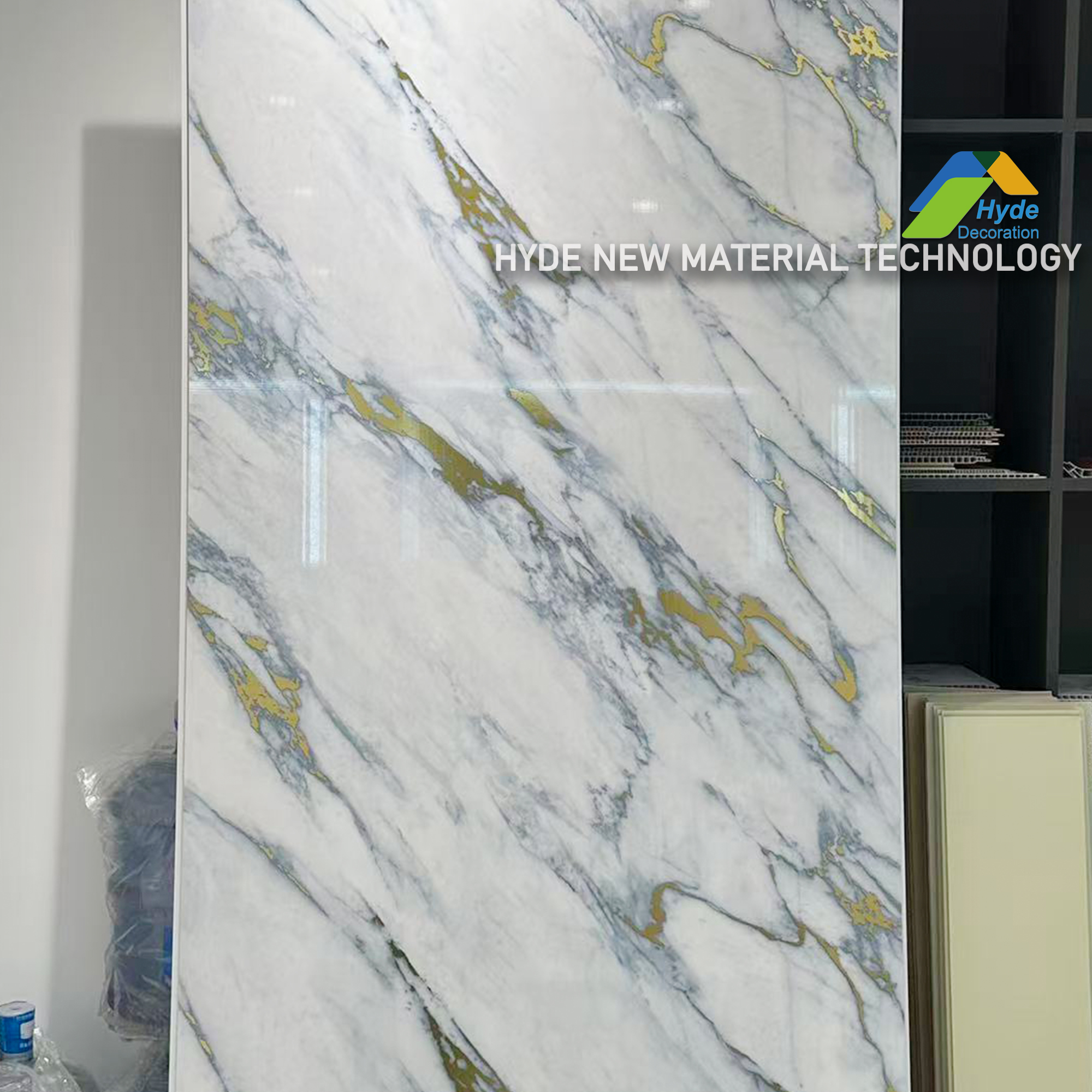
Surface treatments and wear layers protect the decorative print from daily abuse. Protective clear coats prevent moisture from reaching the printed film. PVC UV marble wall panels demonstrate how advanced coatings extend lifespan. UV-cured topcoats cross-link the polymer surface into a hardened shield. This treatment prevents yellowing and fading from ambient sunlight streaming through bathroom windows. It also drastically reduces micro-scratching from routine cleaning over decades of exposure.
Panel texture also impacts practical longevity. Flat profiles generally outlast heavily textured designs. 3D panels offer unique aesthetics and tactile feedback. However, deep textures naturally trap airborne moisture, dust, and soap scum. Homeowners must use more rigorous cleaning methods to maintain these surfaces. Scrubbing deep grooves degrades the protective finish faster than wiping down smooth, flat panels. Smooth surfaces allow water to bead and roll off instantly, reducing the time moisture sits on the surface.
Thermal expansion and contraction present a constant challenge in bathroom environments. Bathrooms experience rapid temperature fluctuations during hot showers. Polyvinyl chloride naturally expands when heated. Built-in expansion gaps are absolutely necessary during installation. Installers must leave a 2mm to 3mm gap at the corners, ceiling lines, and floor lines. Failing to accommodate this thermal movement causes long-term buckling. Panels installed too tightly will eventually pop off the wall substrate as they expand and push against each other.
The mechanical joint design acts as the primary defense against moisture damage. The tongue-and-groove interlocking system creates a seamless barrier. When panels push together, the overlapping lip hides the fastening area. This geometry prevents direct water paths to the substrate behind the cladding. A properly engaged joint requires no internal adhesive to remain watertight. The physical overlap forces water to run vertically down the face of the board, bypassing the seam entirely.
Format size provides distinct advantages in wet zones. Large format boards reduce the total number of vulnerable seams. 1000mm PVC wet wall panels offer specific benefits for shower enclosures. A standard shower wall requires only two wide panels instead of eight narrow ones. Fewer seams directly reduce the statistical probability of joint failure over time. Minimizing vertical joints in direct spray areas maximizes the waterproof integrity of the entire installation.
You must distinguish between the sealant lifecycle and the panel lifecycle. High-quality waterproof PVC wall panels will never rot, rust, or degrade from water exposure. The plastic itself remains impervious indefinitely. However, the silicone sealants used at the corners and base do degrade. Sanitary silicone typically requires replacement every 5 to 7 years. Mold resistant properties in silicone break down over time. Maintaining system integrity requires stripping and replacing this perimeter sealant long before the cladding itself fails.
Warping and delamination rank among the most common premature failure points. Uneven wall substrates create severe stress points across the plastic surface. Pushing a rigid board into a bowed wall forces the material to constantly pull against the adhesive. Insufficient adhesive coverage leaves hollow voids behind the board. Exposure to heat sources exceeding 60°C (140°F) also causes deformation. Installing plastic cladding directly behind uninsulated heating pipes or high-wattage lighting fixtures will melt or warp the internal honeycomb structure.
Impact damage remains a reality of hollow-core construction. High-traffic family bathrooms experience flying toys, dropped shower heads, and sharp elbows. Blunt force punctures will breach the waterproof face layer. Once the face layer cracks, water can enter the internal chambers. This limits the lifespan significantly if not mitigated early. Choosing thicker 8mm or 10mm boards drastically reduces the risk of puncture compared to 5mm alternatives.
Trapped moisture leads to hidden mold growth. Installing cladding over damp walls traps existing moisture inside the wall cavity. Failing to properly seal the bottom edge allows capillary action to draw water upward behind the board. Hidden mold degrades the plasterboard substrate from the inside out. The plastic panel itself survives, but the failing wall behind it forces premature removal. Proper substrate drying and perimeter sealing prevent this catastrophic failure.
Comparing plastic cladding to traditional ceramic or porcelain tiles reveals clear trade-offs. Ceramic tiles boast a lifespan exceeding 50 years. PVC offers a 15 to 30-year lifespan. However, tile grout degrades rapidly. Homeowners often need to rake out and replace grout every 5 to 10 years to prevent water leaks. Cladding eliminates grout entirely. The continuous plastic surface requires zero joint maintenance beyond the perimeter silicone.
Solid acrylic and MDF-core laminates offer alternative cladding options. Acrylic delivers extremely high impact resistance but carries a much higher material cost. It is also heavy and difficult to cut on-site. MDF-core laminates feel solid like wood. They perform well until the outer laminate seal breaks. If water reaches the MDF core, the board swells and fails immediately. Plastic honeycomb boards offer a better cost-to-lifespan ratio without the risk of core swelling.
Moisture-resistant gypsum, commonly known as green board, provides a basic waterproof substrate. Treated gypsum boards typically last 15 years in damp environments. They remain highly vulnerable to structural failure if the surface paint scratches. Paint peels in high humidity. Plastic cladding offers inherent waterproof properties throughout its entire thickness. It does not rely on a thin layer of surface paint to stop water ingress.
Material Type | Expected Lifespan | Water Resistance | Impact Resistance | Maintenance Level |
|---|---|---|---|---|
Cellular PVC (8mm-10mm) | 15 - 30 Years | 100% Waterproof Core | Moderate | Very Low (No Grout) |
Ceramic/Porcelain Tile | 50+ Years | Waterproof Face | High | High (Grout Cleaning) |
MDF-Core Laminate | 10 - 15 Years | Vulnerable Core | High | Low |
Solid Acrylic | 20 - 30+ Years | 100% Waterproof | Very High | Very Low |
Pre-installation wall preparation dictates the final durability of the project. You must ensure the substrate is dry, plumb, and structurally sound. Cladding adheres well to bare plasterboard, treated gypsum, or existing tiles. If installing over old tiles, you must degrease the surface thoroughly. Soap scum prevents the adhesive from bonding. Knock off any loose tiles and fill the voids. A flat, clean surface ensures maximum adhesive contact across the entire back of the board.
Correct adhesive and sealant selection prevents chemical degradation. You must specify high-grab, solvent-free panel adhesives. Solvent-based glues can melt the plastic backing layer over time. This chemical reaction weakens the honeycomb structure. Apply the adhesive in vertical beads rather than closed loops. Vertical beads allow trapped air to escape during installation. Always use high-modulus sanitary silicone for perimeter joints. High-modulus silicone accommodates greater movement without tearing.
Strict cleaning protocols preserve the decorative surface finish. PVC wall panels require very gentle maintenance. Use a soft microfiber cloth and mild liquid soap. You must actively warn against abrasive cleaners. Bleach, scouring powders, and rough sponge pads strip the UV coatings. Removing this protective layer causes the plastic to become brittle and dull over time. Rinsing the walls with warm water after showering prevents soap residue buildup naturally.
To ensure a flawless installation that maximizes lifespan, follow these field-tested steps:
Measure the wall surface and check for plumb using a long spirit level or laser level.
Clean and degrease the substrate, removing any loose debris or flaking paint.
Cut the panels to size using a fine-tooth saw to prevent chipping the decorative face.
Apply solvent-free grab adhesive in vertical beads spaced 100mm apart.
Press the panel firmly against the wall, ensuring the tongue-and-groove joint engages fully with the adjacent board.
Seal all internal corners, external edges, and the base line with high-modulus sanitary silicone.
Plastic wall cladding serves as a highly durable, medium-to-long-term bathroom solution. It will not outlast the building structure like porcelain tile might. However, a 15-to-30-year lifespan offers excellent return on investment. The lower installation labor and complete lack of grout maintenance make it highly practical. Proper material selection and correct installation methods guarantee this longevity. Buyers should prioritize 8mm to 10mm thicknesses for general residential use. Select 1000mm wide formats for shower enclosures to minimize vulnerable seams. Always look for UV-treated finishes to ensure color longevity in bright rooms.
Measure your bathroom's specific wet zones to calculate the exact number of wide-format boards needed.
Request physical material samples to test core rigidity and surface finish quality before ordering.
Verify the specific terms of the manufacturer's warranty, ensuring it covers delamination for at least 10 years.
Purchase solvent-free grab adhesive specifically formulated for plastic wall cladding.
A: The plastic material itself cannot grow mold because it is non-porous and offers no organic food source. However, mold can grow on surface soap scum if not cleaned regularly. Mold can also develop on the silicone sealant at the base of the panels as the sealant ages.
A: Yes, you can install them directly over existing tiles. Ensure the tiles are firmly attached to the wall and thoroughly degreased. Use a high-quality, solvent-free grab adhesive to bond the panels to the glazed tile surface.
A: Panels treated with UV-cured topcoats are highly resistant to fading and yellowing. The UV coating protects the printed design and the underlying polymer from ultraviolet light degradation, ensuring the colors remain vibrant for decades.
A: A puncture breaches the waterproof face layer, allowing water to enter the internal honeycomb chambers. This can lead to trapped moisture and eventual mold growth behind the panel. Punctured panels usually require complete replacement, as patching compromises the aesthetic and waterproof integrity.
A: Yes, 1000mm wide panels are superior for shower enclosures. They cover a standard shower wall with fewer joints. Minimizing seams in direct wet zones drastically reduces the statistical probability of water ingress and sealant failure over time.
A: The plastic panels can last 15 to 30 years, but sanitary silicone sealant typically degrades every 5 to 7 years. You will need to strip out and replace the perimeter silicone multiple times during the lifespan of the cladding system.